
In 2026, the reliance on manual spreadsheets for property administration is no longer just an inefficiency; it is a significant security risk. You've likely experienced the friction of fragmented data and the persistent concern of protecting sensitive tenant information across unencrypted files. Managing a growing portfolio requires a level of precision that manual tracking simply cannot sustain. This guide explores how transitioning to cloud based property management software transforms these administrative burdens into a streamlined, automated system designed for long-term growth.
A centralized architecture provides a secure, objective repository for all property data while automating complex financial operations. We'll examine the specific ways that cloud-native systems eliminate the inconsistencies of manual rent collection and maintenance tracking. You'll learn how to implement verified tenant screening processes that function with clinical accuracy. This strategic overview provides the roadmap for replacing disconnected workflows with a reliable, digital framework that ensures both data integrity and systematic operational efficiency.
Key Takeaways
- Transition from fragmented manual systems to a unified architecture that ensures real-time data accuracy across your entire portfolio.
- Reduce administrative friction by implementing automated rent collection and digital lease management to eliminate manual processing errors.
- Strengthen data security protocols with cloud based property management software designed to protect sensitive tenant information through encrypted storage.
- Enhance the accuracy of your selection process by integrating advanced tenant screening reports with real-time verification capabilities.
- Follow a structured migration process to centralize maintenance management and financial reporting within a single, secure digital portal.
Defining Cloud-Based Property Management Software in 2026
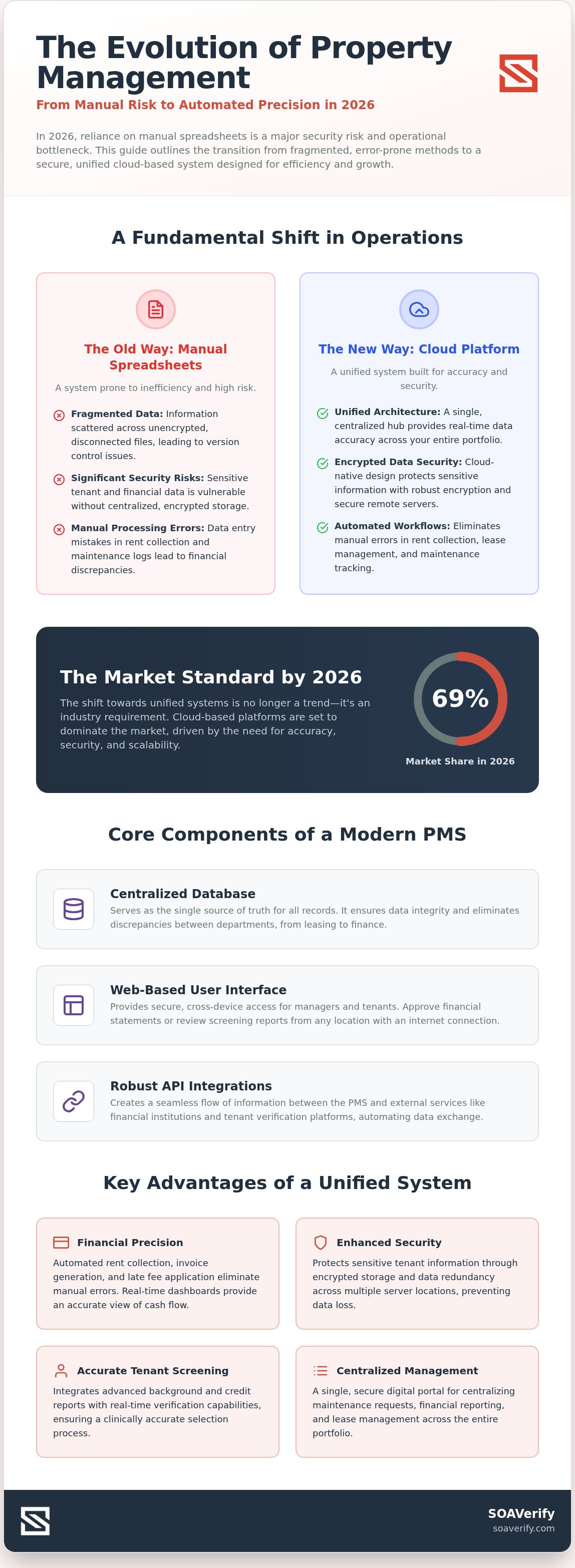
Modern cloud based property management software operates as a unified digital ecosystem. Unlike legacy on-premise systems that required local server maintenance and physical hardware, cloud architecture hosts data on secure, remote servers. This shift allows for real-time data synchronization across all administrative touchpoints. In 2026, the technical standard for Property Management Systems (PMS) requires three core components to function with clinical precision: a centralized database, a web-based user interface, and robust API integrations. These elements ensure that a change made in one module, such as an updated lease agreement, reflects across the financial dashboard and tenant ledger instantly.
Web-based accessibility is now a non-negotiable requirement for multi-location portfolios. Managers need to access sensitive information from various geographic locations without compromising security. The database serves as the secure repository for all records; the interface provides the functional toolset for managers and tenants. API integrations allow the system to communicate with external financial institutions and verification services, creating a seamless flow of information that manual systems can't replicate. It's a structured approach that prioritizes data integrity over simple file storage.
The Shift from Manual to Systematic Management
Manual tracking through spreadsheets introduces significant operational risks. Data entry errors and version control issues often lead to financial discrepancies that are difficult to reconcile. Cloud systems eliminate these data silos by creating a single source of truth. The transition to automated administrative workflows replaces manual reminders with triggered actions. When a tenant submits a maintenance request through a portal, the system logs the entry, notifies the manager, and updates the tracking ledger simultaneously. This systematic approach reduces the cognitive load on staff and ensures no step in the rental lifecycle is overlooked. It's about moving from reactive fixes to a controlled, predictable process.
Core Characteristics of Modern Property Platforms
Scalability is a primary requirement for 2026 property portfolios. A platform must support a single unit as effectively as it supports a large-scale enterprise. Modern cloud based property management software provides cross-device compatibility, allowing managers to verify tenant screening reports or approve financial statements from any secure connection. High standards for data redundancy and persistent uptime are essential. Systems now utilize multiple server locations to prevent data loss during localized outages. This ensures that your administrative data remains protected and accessible at all times, providing the stability required for long-term portfolio growth.
The Functional Advantages of Centralized Cloud Operations
Centralization serves as the primary driver of operational efficiency in modern property administration. It provides a single hub for every task, eliminating the need for manual data reconciliation between separate tools. By integrating the rental lifecycle into one platform, managers maintain a consistent record from the initial application to the final move-out. The transition to cloud technology ensures that every action updates the central ledger instantly. This prevents the information lag common in legacy systems. With cloud-based solutions projected to account for 69.06% of the market share in 2026, the shift toward these unified systems is a standard industry requirement. It's a method that prioritizes accuracy over manual effort.
Financial Precision and Automated Collection
Automated rent collection is a critical component of cloud based property management software. It removes the variables associated with physical checks. Manual ledger entries are prone to error; digital systems are not. These platforms trigger invoice generation and apply late fees based on predefined logic. This ensures policy consistency across all units. Direct bank integration facilitates secure fund transfers, which reduces the risk of human error during reconciliation. Such automation allows for a Financial Performance Dashboard that reflects cash flow in real-time. Decisions are then based on verified data rather than estimates.
Maintenance and Operational Oversight
Centralized maintenance management standardizes how service requests are handled. Tenants submit issues through a dedicated portal. This creates a permanent digital trail from submission to resolution. The system allows managers to track vendor performance and maintenance history within the cloud environment. Standardized tracking helps identify recurring issues that might impact property value. Proactive maintenance becomes possible when the software identifies patterns in repair data. This systematic oversight ensures that the physical asset remains in optimal condition. It doesn't require constant manual supervision.
Real-time financial performance dashboards provide a granular view of portfolio health. Managers can analyze occupancy rates, net operating income, and expense ratios without manual calculation. This data-driven approach allows for precise budgeting and forecasting. When financial data is centralized, the risk of unrecorded expenses or missed revenue disappears. Integrated digital tools also manage the transition between tenants with minimal friction. Digital lease management ensures that all parties sign documents in a secure, verifiable environment. This reduces the time a unit remains vacant. Every stage of the process is documented and stored within the cloud, providing a comprehensive audit trail for every property in the portfolio.
Enhancing Security and Tenant Verification through Cloud Architecture
Security in 2026 requires a shift from passive storage to active protection. cloud based property management software provides the infrastructure needed to secure Personally Identifiable Information (PII) at the database level. Modern systems utilize advanced encryption standards, such as AES-256 for data at rest and TLS 1.3 for data in transit, ensuring that sensitive tenant records remain inaccessible to unauthorized parties. This architectural approach moves beyond simple password protection to include multi-factor authentication and role-based access controls. According to MIT on the Future of Real Estate Technology, these digital platforms are fundamental to managing the increasing complexity of data analytics in the property sector.
Verification processes must be immediate and accurate. Real-time background and credit checks integrate directly with the application portal. This eliminates the delay of third-party manual processing. For international portfolios, cloud systems facilitate income verification across different banking jurisdictions. This ensures that financial stability is confirmed before a lease is generated. It provides a layer of validation that manual systems cannot offer. The system functions as a silent, meticulous partner that verifies every detail with clinical precision before any commitment is made.
The Science of Modern Tenant Screening
Integrating background checks into the leasing workflow reduces administrative friction. It replaces subjective judgment with objective data points. Clinical reports provide a clear pass/fail metric based on specific criteria like credit history or criminal records. This systematic approach reduces landlord risk and ensures consistency in lease approvals. By relying on verified Tenant Screening Reports, managers can maintain a high standard of portfolio quality without the bias inherent in manual review processes. The automation of these checks ensures that every applicant is evaluated against the same rigorous standards.
Data Integrity and Regulatory Compliance
Regulatory compliance is a core function of modern cloud platforms. Systems must adhere to global standards like GDPR and CCPA. Centralized, audited access logs track every interaction with sensitive data. This provides a clear trail for compliance audits. In cross-border rental scenarios, the software manages the different legal requirements for data storage and tenant privacy automatically. This allows managers to operate across multiple regions with confidence in their regulatory standing. Maintaining data integrity is no longer a manual task; it's a built-in feature of the cloud architecture that protects the business from legal and financial liabilities.
Critical Selection Criteria: Evaluating Cloud Software for Your Portfolio
Selecting the correct cloud based property management software requires a systematic evaluation of its technical architecture. It's not enough to review feature lists. You must assess the depth of integrated verification tools. A high-quality system provides more than surface-level data; it delivers clinical precision in its results. Verification processes should integrate seamlessly with the leasing workflow to ensure that every tenant meets established standards. Dashboard transparency is equally vital. Financial reporting must provide a clear, real-time view of portfolio performance without requiring manual reconciliation. Decisions are only as good as the data they're based on.
Maintenance portal reliability is a critical metric. A functional portal tracks requests from the point of submission to final resolution, providing a clear audit trail for every asset. Onboarding and support quality determine how quickly the system becomes an asset rather than a learning burden. You need a partner that provides structured training and technical stability. Testing the responsiveness of these interfaces for both managers and tenants ensures that the system reduces friction rather than creating it. You can access our specialized management framework to see how these criteria function in a live environment.
Interpreting Technical Specifications
Technical depth distinguishes professional platforms from basic tools. API availability is essential for custom integrations with existing financial or communication software. Mobile functionality should mirror the depth of the desktop interface, allowing for remote management without loss of control. Data exportability ensures that you maintain ownership of your records. Regular, automated backups protect against data loss and ensure persistent uptime. These specifications provide the structural integrity required for modern property administration.
The Importance of a Specialized Silent Partner
The most effective platforms operate efficiently in the background. You should prioritize software that values accuracy over flashy, non-essential features. A specialized silent partner ensures that systems function correctly without demanding constant attention. This background efficiency allows you to focus on portfolio growth while the software manages the precision of daily operations. Aligning these capabilities with your specific goals ensures long-term operational stability and data security. It's a professional approach to administrative order.
Implementing SOAVerify: A Systematic Approach to Portfolio Management
Implementing a cloud based property management software requires a structured approach to ensure data continuity and operational stability. SOAVerify serves as a meticulous silent partner, providing a technical framework that prioritizes verification and security. The migration process begins with a comprehensive audit of existing records to ensure data integrity. Once your records are validated, the system configuration aligns with the specific administrative requirements of your portfolio. This systematic transition ensures that no information is lost during the move from legacy systems to a unified cloud environment. It's a precise methodology designed to replace administrative friction with a controlled, digital workflow.
Utilizing the Financial Performance Dashboard allows for granular oversight of portfolio health. You can monitor cash flow, track expense ratios, and identify growth opportunities with clinical precision. This data-driven approach removes the ambiguity often found in manual reporting or fragmented spreadsheets. By centralizing all financial data, the system provides an objective view of performance that is updated in real-time. This level of clarity is essential for making informed decisions regarding asset acquisition or operational adjustments. The dashboard functions as a high-level administrator, ensuring that every financial detail is accounted for and verified.
Achieving Operational Order with SOAVerify
Immediate efficiency is gained through the configuration of Automated Rent Collection. This feature eliminates the variables associated with manual processing and late payment tracking. The Maintenance Management Portal standardizes how requests are received and resolved, which significantly reduces tenant friction and protects property value. High-quality placements are secured by leveraging advanced Tenant Screening Reports, which provide verified background and credit data directly within the platform. Digital Lease Management ensures that every contract is signed and stored in a secure, verifiable environment. These integrated tools function together to create a predictable and highly organized administrative environment.
Contact and Consultation
Professional system optimization begins with a specialized portfolio assessment. You can engage with SOAVerify specialists to review your current workflows and identify areas for technical improvement. This consultation ensures that the system configuration meets your specific operational goals and adheres to 2026 security standards. Accessing specialized support allows for a smoother implementation and faster realization of efficiency gains. You can establish a secure, systematic property management framework with SOAVerify to begin the transition toward a more precise administrative model. This step secures your data and streamlines your administration for long-term growth.
Securing Operational Stability for Your Portfolio
The transition to a unified digital architecture is a strategic necessity for managing modern real estate assets. By centralizing fragmented data, you eliminate the risks associated with manual tracking and unencrypted spreadsheets. This shift provides the structural integrity required to protect sensitive information while ensuring that every administrative action is documented and verifiable. Implementing cloud based property management software is the foundational step toward achieving this high level of administrative order. It allows you to move from reactive troubleshooting to a controlled, systematic process.
A reliable system functions as a meticulous silent partner, managing the complexities of your portfolio with clinical precision. You can now automate your property management with the precision of SOAVerify. This framework provides access to meticulous tenant screening reports, automated rent collection systems, and integrated maintenance portals designed for portfolio order. These tools work together to reduce operational friction and support long-term growth. Establishing a secure, automated environment ensures that your properties remain protected and your administration remains efficient. You're ready to build a more resilient and scalable management model.
Frequently Asked Questions
What is the primary benefit of cloud-based property management software?
The primary benefit is the centralization of all administrative data into a single source of truth. This eliminates the risks associated with fragmented spreadsheets and manual reconciliation. By utilizing cloud based property management software, you ensure that financial ledgers, tenant records, and maintenance logs remain synchronized in real-time. This structural order reduces human error and provides the precision necessary for portfolio growth.
How does cloud-based software improve tenant screening accuracy?
Accuracy improves through direct API integrations with credit bureaus and criminal databases. This removes the subjective variables and delays found in manual screening processes. Integrated systems provide clinical reports based on objective data points like credit scores and verified income. This systematic approach ensures that every applicant is evaluated against the same rigorous standards, reducing the risk of bad debt or property damage.
Is my data secure in a cloud-based property management platform?
Data security in 2026 is maintained through advanced encryption standards and audited access logs. Systems typically employ AES-256 encryption for data at rest and TLS 1.3 for data in transit. These platforms also include multi-factor authentication and role-based access controls to protect sensitive Personally Identifiable Information. Regular backups and redundant server locations ensure that your data remains both secure and accessible during localized outages.
Can I manage multiple property types in one cloud system?
Yes, modern cloud systems are designed to scale across residential, commercial, and mixed-use portfolios. The database architecture allows for the categorization of different asset types while maintaining a unified financial dashboard. This flexibility ensures that you can manage diverse properties without switching between different software tools. It provides a consistent administrative framework regardless of the specific property type or geographic location.
How does automated rent collection handle late payments?
Automated systems handle late payments by triggering predefined logic based on the digital lease agreement. When a payment deadline passes, the software automatically generates an invoice and applies the appropriate late fee. This removes the need for manual tracking and ensures that policy enforcement remains consistent across all units. Tenants receive automated notifications, which reduces the administrative burden on the property manager.
What should I look for in a maintenance management portal?
A maintenance management portal should prioritize a clear digital audit trail from the initial request to the final resolution. You should look for features that allow for vendor performance tracking and standardized service request forms. The portal must enable tenants to submit issues directly, which reduces communication friction. This systematic oversight helps maintain property value by identifying recurring repair patterns through historical data analysis.
How does cloud software assist with international tenant verification?
Cloud platforms facilitate international verification by integrating with global financial networks for income and identity validation. This allows managers to confirm the financial stability of international applicants without relying on physical documentation. These systems manage the differing legal requirements for data privacy across jurisdictions automatically. It ensures that cross-border leasing remains compliant with local regulations while maintaining a high standard of tenant quality.
What is the implementation process for moving to a cloud-based system?
Implementation begins with a comprehensive data audit followed by a structured migration into the cloud based property management software environment. Managers first validate existing tenant and financial records to ensure accuracy before the transfer. Once the data is migrated, the system is configured to match specific operational workflows and lease terms. Final steps include staff training and the activation of tenant portals to ensure a seamless transition.
