

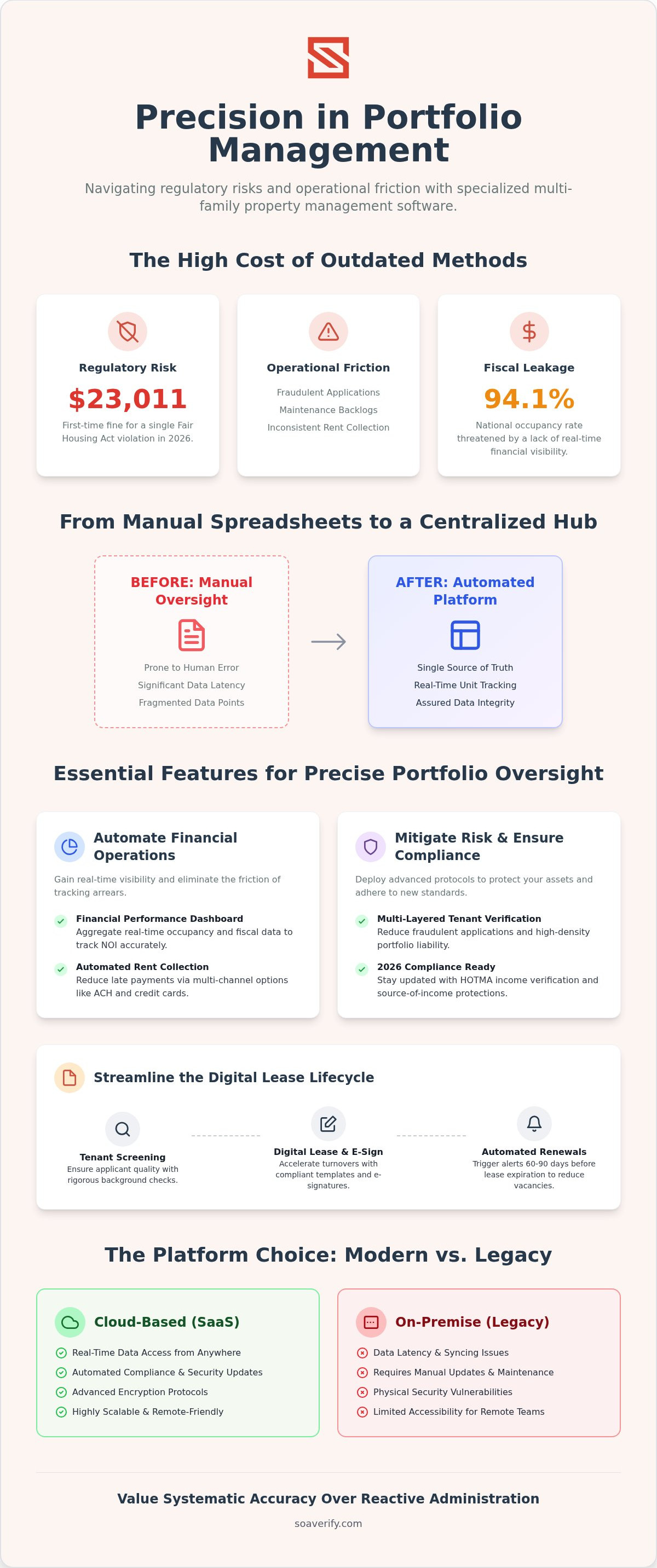
A single Fair Housing Act violation in 2026 can result in a first-time fine of $23,011. For owners of multi-unit portfolios, these regulatory risks are compounded by the daily friction of maintenance backlogs and fraudulent tenant applications. You understand that manual oversight is no longer a viable strategy for maintaining a 94.1% national occupancy rate. Inconsistent rent collection and a lack of real-time financial visibility often lead to avoidable fiscal leakage. Precise multi family property management software is now a requirement for those who value systematic accuracy over reactive administration.
This guide provides a clinical analysis of the software features essential for precise portfolio oversight. We will examine how automated fiscal reporting and advanced tenant verification protocols reduce operational risk. You'll learn to implement systematic tools that streamline leasing and centralize management across all your units. We also address new 2026 compliance standards, including HOTMA income verification rules and updated source-of-income protections. This review covers the technical requirements for risk mitigation and the automation tools necessary to maintain a high-quality tenant base in a stabilizing investment market.
Key Takeaways
- Transition from manual spreadsheets to a centralized operational hub to ensure precise unit-level tracking and data integrity.
- Implement multi family property management software to automate rent collection and eliminate the administrative friction of tracking arrears.
- Deploy multi-layered tenant verification protocols to mitigate the risk of fraudulent applications and high-density portfolio liability.
- Utilize a centralized financial performance dashboard to gain real-time visibility into occupancy rates and maintenance backlogs.
- Evaluate the total cost of ownership by weighing subscription fees against the operational savings achieved through automated fiscal reporting.
Understanding Multi-Family Property Management Software Requirements
Effective multi family property management software serves as a centralized operational hub. It integrates fragmented data points into a single, verifiable source of truth. Historically, managers relied on manual spreadsheets to track unit-level details. This method is prone to human error and significant data latency. Modern systems replace these manual workflows with automated unit-level tracking. This transition allows for precise oversight of complex portfolios. It's no longer enough to manage units in isolation; you must view them as a cohesive financial engine.
Distinguishing between single-unit residential tools and specialized multi-unit platforms is critical for portfolio health. Single-unit tools often lack the structural depth required for high-density assets. Specialized property management software handles the administrative nuances of multi-family buildings. These include shared utility billing, common area maintenance, and complex lease structures. By consolidating these functions, managers can improve their Net Operating Income (NOI). This improvement stems from reduced overhead and accelerated rent cycles. A centralized Financial Performance Dashboard provides the necessary transparency to track these metrics accurately.
The Scalability Factor in Multi-Unit Portfolios
Managing multiple leases simultaneously requires a system that prevents administrative overlap. Efficient multi family property management software uses automated synchronization to handle high-volume data entry. This removes the need for repetitive manual input across different units. Bulk actions are a core requirement for scalability. Managers can execute portfolio-wide rent increases or use Digital Lease Management for renewals with a single command. This ensures consistency across the entire portfolio while saving significant administrative hours. It also reduces the risk of missed deadlines or incorrect billing.
Cloud-Based vs. On-Premise Solutions
Real-time data access is the primary advantage of cloud-based platforms. Remote property managers can view live financial data from any location. This eliminates the delays associated with on-premise hardware. Security remains a top priority. Modern SaaS solutions use advanced encryption protocols to protect sensitive tenant and financial data. Automated Rent Collection systems within the cloud ensure funds are processed without delay. Automatic updates ensure the system remains compliant with changing 2026 regulations without manual intervention. This model provides a level of stability that legacy on-premise systems cannot match. It allows the software to function as a meticulous silent partner in your daily operations.
Essential Features for Modern Multi-Unit Portfolio Management
Effective multi family property management software requires more than basic data entry. It must provide a Financial Performance Dashboard that aggregates real-time occupancy and fiscal data across the entire portfolio. This level of oversight allows managers to identify underperforming units before they impact the bottom line. Automated Rent Collection is another critical pillar for modern operations. By offering multi-channel payment options, such as ACH, credit cards, and digital wallets, you reduce the likelihood of late payments. The system should automatically reconcile these payments against the general ledger, removing the need for manual accounting entries. This precision ensures that financial reports remain accurate and up to date.
The Digital Lease Lifecycle
The process of resident onboarding begins with a rigorous tenant screening report to ensure applicant quality. Once verified, the software should facilitate Digital Lease Management to maintain a seamless transition. This includes generating leases from pre-vetted compliance templates that adhere to 2026 legal standards. Electronic signature integration accelerates unit turnovers by removing physical barriers to lease execution. Automated renewal notifications are equally important. The system should trigger alerts 60 to 90 days before a lease expires, allowing for timely negotiations and reducing the risk of unexpected vacancies. This systematic approach ensures that the transition from applicant to resident is documented and legally sound. Managers who prioritize these steps often see a reduction in vacancy periods. To see how these tools integrate into a single workflow, you might explore a consolidated dashboard.
Maintenance and Asset Preservation
Integrated maintenance management prevents the gradual depreciation of physical assets within a multi-unit portfolio. A Maintenance Management Portal allows tenants to submit service requests directly, which creates a clear and permanent audit trail. This transparency is essential for tracking repair costs and evaluating their impact on unit-level profitability. Preventative maintenance scheduling within the platform further protects the portfolio from unexpected failures. By automating reminders for routine inspections and system servicing, you extend the lifespan of mechanical components and structural elements. This proactive stance ensures that small issues do not escalate into capital-intensive repairs. Accurate multi family property management software must link these maintenance costs directly to the broader financial reports for precise asset valuation. This integration provides a realistic view of the net operating income after accounting for all physical upkeep.
Automating Financial Operations and Performance Tracking
Modern financial management relies on the elimination of physical rent checks. These manual instruments introduce latency and risk into the cash flow cycle. Automated Rent Collection systems replace these vulnerabilities with direct, digital transfers. This process ensures that funds move securely from the tenant's account to the property's bank account without manual intervention. Multi family property management software reconciles these transactions in real time, maintaining an accurate general ledger. This systematic approach allows managers to focus on asset growth rather than administrative correction. It creates a stable environment where financial data is always current and verifiable.
Arrears tracking must be objective and immediate. When a payment deadline passes, the system identifies the delinquency and applies late fees according to the lease terms. This automation removes the interpersonal friction often associated with fee enforcement. By consolidating all income and expenses, the software generates tax-ready financial reports. These documents provide a clear audit trail for every unit in the portfolio. Identifying underperforming units becomes a data-driven exercise. You can pinpoint exactly where maintenance costs or high turnover rates are eroding your Net Operating Income. This level of precision is only possible through integrated financial tracking.
Maximizing Cash Flow via Automation
Speed is a critical factor in liquidity. Automation reduces the time between payment initiation and bank deposit, often settling funds within 48 hours. Every transaction triggers an automated ledger update, providing immediate financial visibility. This real-time data allows for more precise capital allocation. Automated reminders also play a vital role in reducing delinquency. By sending neutral, scheduled notifications to tenants before the due date, the system encourages timely compliance. This proactive communication maintains a steady cash flow without requiring constant manager oversight. It ensures that the "rent check" era remains a relic of the past.
Financial Performance Dashboards
A Financial Performance Dashboard visualizes portfolio health through specific Key Performance Indicators (KPIs). You can compare the performance of different multi-family locations side by side. This comparison reveals which properties require operational adjustments and which are meeting their targets. The software also facilitates revenue forecasting. By analyzing lease renewal data and historical vacancy rates, the platform predicts future income with high accuracy. This allows owners to make informed decisions regarding acquisitions or capital improvements. Unlike basic payment tools, comprehensive multi family property management software integrates maintenance costs directly into these financial views. This ensures that your performance metrics reflect the true cost of asset preservation.
Mitigating Risk Through Advanced Tenant Verification
Advanced tenant verification is a multi-layered security process that extends beyond basic financial snapshots. In high-density environments, relying solely on a credit score is insufficient. Fraudulent applications and identity theft are increasing risks in the 2026 rental market. Precise multi family property management software integrates comprehensive screening directly into the digital application workflow. This integration ensures that every applicant undergoes the same rigorous validation process before a lease is generated. By removing manual entry, you eliminate the risk of administrative bias or data entry errors that could lead to legal liability.
Compliance with Fair Housing regulations is a primary concern for modern portfolio managers. HUD guidelines now require individualized assessments of criminal records, making blanket disqualification policies illegal. Federal fines for violations have increased significantly; a third offense can now exceed $115,054. Objective screening tools help you navigate these requirements by applying consistent, pre-defined criteria to every applicant. This systematic approach protects your business from discrimination claims while ensuring a high-quality tenant base. It also helps manage state-specific mandates, such as Colorado's 2026 cap on security deposits at two months' rent.
Tenant Screening Reports and Background Checks
A robust tenant screening report analyzes credit history, criminal records, and prior evictions with surgical clarity. The software must also verify employment and income stability automatically to comply with new 2026 HOTMA rules. These rules affect how income is calculated and verified for many applicants. Automated systems cross-reference data points to identify inconsistencies that might suggest fraud. This level of background verification is essential for maintaining the national average occupancy rate of 94.1% without compromising on resident quality. It ensures that your financial performance remains stable by reducing the likelihood of future evictions.
Cross-Border and International Verification
High-mobility urban markets often attract international applicants, which introduces unique verification challenges. Validating identity and financial history for non-domestic residents requires specialized tools that legacy systems lack. Advanced multi family property management software provides cross-border verification to confirm the legitimacy of international income sources. This capability is critical for reducing fraud risk in major metropolitan areas. It allows you to expand your applicant pool safely while maintaining strict risk mitigation standards. By validating international data with the same precision as domestic reports, you ensure portfolio-wide security. To implement these high-precision tools for your portfolio, you can access advanced screening reports here.
- Identity Validation: Confirms the authenticity of government-issued identification from multiple jurisdictions.
- Income Verification: Automatically checks the stability of domestic and international revenue streams.
- Compliance Monitoring: Ensures all screening activities align with the latest Fair Housing and source-of-income protections.
Selecting and Implementing Your Management Platform
Selecting the right multi family property management software requires a rigorous evaluation of the total cost of ownership. You shouldn't view the subscription fee in isolation. Instead, weigh it against the long-term operational savings achieved through systematic automation. A platform that reduces manual administrative tasks or prevents a single regulatory fine provides a clear return on investment. Efficiency isn't the only metric for success. The user experience for both managers and tenants determines the ultimate utility of the system. When the interface is intuitive, tenant adoption of the portal increases. This leads to more consistent data entry and faster maintenance resolutions across your portfolio.
Moving from legacy systems or fragmented spreadsheets requires a structured data migration strategy. This process ensures that historical records, lease terms, and tenant histories transfer without a loss of data integrity. You should prioritize providers that offer specialized support and training during this transition. Technical precision during migration prevents billing errors and ensures that your financial reporting remains accurate from the first day of operation. A reliable silent partner in the software space will provide the necessary oversight to make this transition seamless and secure.
Implementation Strategy for Multi-Unit Landlords
A phased rollout is the most stable approach for managing large portfolios. You might start by implementing the multi family property management software in a single building or a specific unit block. This allows your team to master the workflow before a full-scale deployment. Clear communication is essential for tenant onboarding. When residents understand the security and convenience of the new portal, they're more likely to transition to digital payments. Setting up the Financial Performance Dashboard early provides immediate visibility into the health of the pilot units. This data allows you to refine your internal processes before expanding the system across the entire portfolio.
The SOAVerify Advantage for Multi-Family Portfolios
SOAVerify provides a consolidated interface that integrates tenant screening, rent collection, and maintenance management into one clinical platform. This approach removes the need for multiple, disconnected tools that often lead to data silos and administrative friction. By leveraging Automated Rent Collection, you stabilize monthly cash flow and reduce the burden of tracking arrears manually. The platform functions as a competent specialist, ensuring that every process follows established protocols. This systematic oversight allows you to manage high-density assets with surgical clarity and professional confidence. Optimize your multi-family operations with SOAVerify.
Strategic Portfolio Oversight for 2026 and Beyond
Managing a multi-unit portfolio in 2026 requires a transition from reactive administration to systematic oversight. You've seen how precise data integration reduces the risk of Fair Housing violations and fiscal leakage. High-precision multi family property management software serves as the foundation for this stability. It replaces fragmented workflows with a single, verifiable source of truth for your entire operation. By prioritizing advanced cross-border verification technology, you protect your assets from the increasing complexity of international fraud.
Integrated maintenance request management ensures that physical assets don't depreciate due to administrative neglect. Automated financial performance dashboards provide the real-time visibility needed to make informed capital decisions. These tools function as a meticulous silent partner, maintaining order while you focus on strategic growth. Implementing these systems correctly is the final step in securing your portfolio's long-term health. You can now move forward with the confidence that your data and processes are under control.
Streamline your multi-family portfolio with SOAVerify.
Frequently Asked Questions
What is the best property management software for multi-family units?
The ideal software depends on your portfolio size and specific administrative needs. For managers who require high-precision tenant verification and consolidated financial oversight, SOAVerify provides the necessary technical depth. It balances operational automation with rigorous security protocols. You should prioritize platforms that offer centralized control over multiple units rather than generic residential tools designed for single-family homes.
How does automated rent collection improve multi-unit profitability?
Automated rent collection improves profitability by reducing the labor hours spent on manual reconciliation and check processing. It accelerates cash flow by settling funds faster and reduces delinquency through automated late fee application. By offering multi-channel payment options, you increase the likelihood of on-time payments. This systematic approach ensures a steady income stream and reduces the administrative costs associated with traditional collection methods.
Can I perform international tenant screening with property management software?
Yes, specialized multi family property management software platforms like SOAVerify offer advanced cross-border verification technology. This capability allows you to validate the identity and income stability of non-domestic applicants with clinical precision. It is an essential tool for reducing fraud risk in high-mobility urban markets. These systems cross-reference international data points to ensure that every resident meets your established quality standards regardless of their country of origin.
What features should I look for in a multi-family maintenance portal?
A robust maintenance portal must include integrated service request management that creates a permanent audit trail for every repair. Look for features that allow you to track repair costs at the unit level and evaluate their impact on profitability. The portal should also facilitate preventative maintenance scheduling. This proactive approach prevents asset depreciation and ensures that small mechanical issues don't escalate into capital-intensive failures.
How secure is tenant data in cloud-based property management platforms?
Modern cloud-based platforms use advanced encryption and secure server protocols to protect sensitive tenant and financial data. These systems are typically more secure than on-premise solutions because they receive automatic security updates to counter evolving digital threats. Data is backed up across multiple secure locations to prevent loss. This architecture provides a level of stability and protection that is critical for maintaining long-term tenant trust and regulatory compliance.
Does multi-family software help with lease renewals and turnover?
Yes, multi family property management software automates the lease lifecycle by triggering renewal notifications 60 to 90 days before expiration. This allows for timely negotiation and reduces the risk of unexpected vacancies. Digital lease management tools facilitate faster execution through electronic signatures. By streamlining the transition from applicant to resident, you minimize the turnover period and maintain a higher occupancy rate across your portfolio.
What is a financial performance dashboard for landlords?
A financial performance dashboard is a centralized interface that visualizes portfolio health through specific key performance indicators. It consolidates real-time data on occupancy rates, rent collection, and maintenance expenses into a single view. This transparency allows you to identify underperforming units and make data-driven decisions regarding capital improvements. It removes the need for manual reporting and provides an objective view of your net operating income at any time.
Is tenant screening compliant with 2026 rental regulations?
Professional management platforms are designed to adhere to 2026 Fair Housing Act and HUD guidelines. The software applies objective screening criteria consistently to every applicant, which mitigates the risk of discrimination claims. It also helps you stay compliant with state-specific source-of-income protections and new HOTMA income verification rules. Automated systems ensure that your screening process remains legally sound and updated as regulations change.

