

What if the document you rely on for a high-value leasing decision is actually a carefully crafted deception? The sophistication of document forgery continues to rise, and relying on unverified paperwork within a tenant screening report leaves your property investment vulnerable. You likely recognize that a rigorous vetting process is the only method to maintain the integrity of your portfolio and avoid the significant financial burden of future evictions.
This guide provides a systematic, step-by-step breakdown of every essential component within these professional reports. You'll learn how to validate identity through Nigerian databases like NIN and BVN, interpret complex credit data with accuracy, and identify behavioral red flags with clinical precision. We will examine the technical markers of a reliable applicant and the specific data points that signal high risk. By the end of this analysis, you'll possess the technical knowledge required to transform raw data into a secure, data-driven leasing strategy that protects your assets.
Key Takeaways
- Define the core data sets required for a professional tenant screening report to ensure every leasing decision is backed by verified legal and financial evidence.
- Utilize Nigerian identity databases like NIN and BVN to eliminate document fraud and confirm applicant authenticity.
- Recognize critical financial red flags, such as a debt-to-income ratio exceeding 40%, that indicate a high risk of rent defaults.
- Detect patterns of instability by analyzing address history gaps that may conceal previous evictions or legal disputes.
- Integrate systematic verification into your administrative workflow to maintain a secure and efficient property management process.
Anatomy of a Professional Tenant Screening Report
A professional tenant screening report functions as a clinical validation of an applicant's historical reliability. It's a comprehensive document that aggregates financial, legal, and behavioral data to provide a clear risk profile. Without this data, a landlord operates on assumptions rather than evidence. The report transforms subjective impressions into a structured data set that guides objective leasing decisions.
Identity and Background Verification
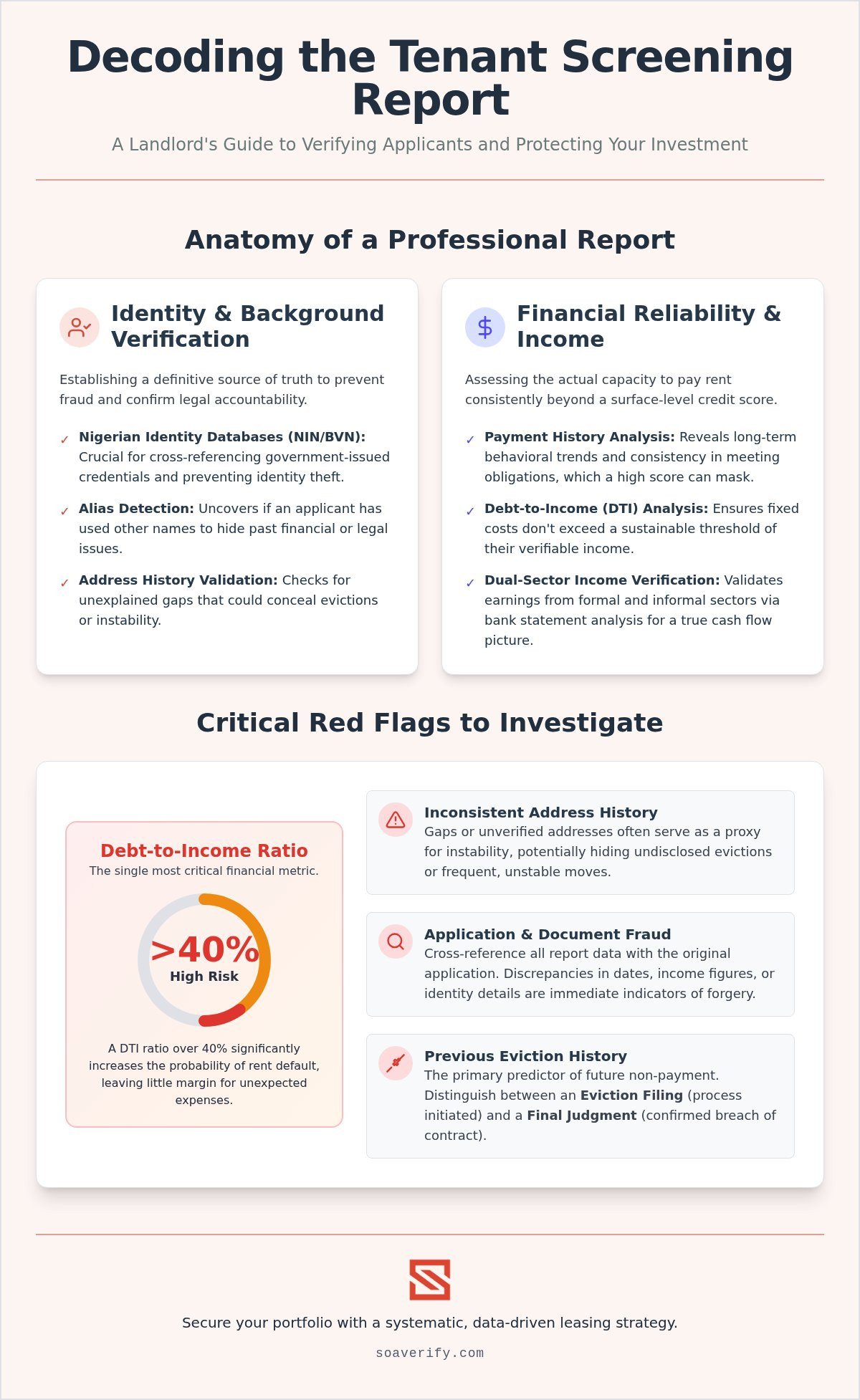
Establishing a definitive source of truth begins with identity validation. In the Nigerian market, this process requires cross-referencing government-issued credentials such as the National Identification Number (NIN) or Bank Verification Number (BVN). These digital identifiers are critical for preventing identity theft and document forgery. When you verify these points, you ensure the person signing the lease is legally accountable for the contract.
A thorough background check also investigates:
- Alias Detection: Identifying if the applicant has operated under different names to obscure past legal or financial issues.
- Address History: Validating previous residences to ensure there are no unexplained gaps; these gaps often hide undisclosed evictions or frequent, unstable moves.
Financial Reliability and Income Insights
A tenant screening report must look past the surface-level credit score. While a score provides a quick snapshot, the underlying payment history reveals long-term behavioral trends. You should look for consistency in meeting recurring obligations. A high score can sometimes mask recent financial instability if it's not viewed alongside current debt levels.
Verification of income remains a primary safeguard against rent default. This involves:
- Debt-to-Income Analysis: Confirming that fixed costs don't exceed a sustainable threshold, typically 40% of verifiable monthly income.
- Dual-Sector Verification: Validating earnings from both the formal corporate sector and the informal entrepreneurial sector through systematic bank statement analysis.
For Nigerian landlords, interpreting bank statements is often more reliable than traditional pay stubs. It provides a transparent view of actual cash flow and existing financial commitments. This level of scrutiny reduces the risk of accepting applicants with falsified employment letters or inflated income claims.
Interpreting Report Data: Identifying Red Flags and Risks
Receiving a tenant screening report is only the initial step in a secure leasing process. You must analyze the specific data points to identify high-risk behaviors that lead to financial loss. Raw data requires a framework for interpretation to distinguish between an acceptable risk and a liability. A clinical approach to these red flags ensures your decisions remain objective and data-driven.
A critical metric in any financial assessment is the debt-to-income ratio. If an applicant's fixed monthly obligations exceed 40% of their verifiable income, the probability of rent default increases significantly. This threshold leaves little margin for the applicant to manage unexpected expenses. You should also examine payment patterns rather than just totals. Frequent late payments across multiple accounts suggest chronic financial neglect, whereas a single, isolated debt might indicate a situational anomaly that doesn't necessarily predict future rental behavior.
Inconsistent address history often serves as a proxy for instability. Gaps in a residence timeline or unverified addresses can indicate hidden evictions or attempts to bypass negative landlord references. Similarly, when reviewing legal records, you must distinguish between minor infractions and serious, safety-related offenses. Focus on patterns of behavior that directly impact the safety of your property and other residents.
Spotting Application Fraud
Document forgery is an increasing risk in modern property management. Applicants may present forged bank statements or fabricated employer references to bypass traditional vetting. You must cross-reference the data in the tenant screening report against the original application. Discrepancies in dates, income figures, or identity details are immediate indicators of fraud. Utilizing a systematic verification tool helps automate this cross-referencing process to ensure the integrity of your data.
The Significance of Eviction History
Previous evictions remain the primary predictor of future non-payment. However, you should understand the distinction between an eviction filing and a final judgment. A filing indicates that a legal process was initiated, while a judgment confirms the court's final ruling against the tenant. Both are relevant markers of risk, but a final judgment represents a confirmed breach of contract that necessitates extreme caution in your leasing decision.
Implementing Screening into Your Management Workflow
Integrating a tenant screening report into your operational workflow requires a disciplined sequence of actions. This systematic approach ensures that you remain legally compliant while maximizing administrative efficiency. Each step serves to reduce the friction inherent in candidate selection and provides a clear audit trail for your leasing decisions.
- Step 1: Obtain Written Consent. You must secure explicit permission from the applicant before initiating any background or credit checks. This protects your business from legal liability and establishes transparency from the outset.
- Step 2: Initiate Systematic Verification. Utilize a specialized digital platform like SOAVerify to generate the report. This removes the administrative burden of manual data collection and ensures the accuracy of Nigerian identity and financial records.
- Step 3: Apply Objective Standards. Compare the report results against your pre-defined 'Minimum Leasing Standards'. This prevents subjective bias and ensures every applicant is measured against the same risk-mitigation criteria.
- Step 4: Maintain Secure Storage. Store all report data in an encrypted environment. Adhering to data privacy regulations, such as the Nigeria Data Protection Regulation (NDPR), is essential for professional property management.
Automation and Efficiency
Digital lease management platforms significantly reduce the 'time-to-fill' for vacant properties by removing manual bottlenecks. When you integrate results directly into the tenant screening and lease signing process, you eliminate redundant data entry. This seamless transition from verification to contract execution maintains momentum and secures high-quality tenants before they pursue other options.
Local Compliance and Best Practices
Operating in the Nigerian rental market requires a balance between rigorous vetting and local regulatory compliance. While Nigerian law provides landlords with specific rights, you must maintain professional standards when communicating adverse decisions. If a tenant screening report leads to a rejection, provide the applicant with a clear, objective reason based on your leasing standards. This practice builds long-term trust and reinforces your reputation as a meticulous and fair property manager. It's essential to treat data with clinical precision to ensure your processes remain beyond reproach.
Securing Your Portfolio Through Data Validation
A professional tenant screening report serves as the definitive barrier between a high-risk applicant and your property investment. By moving beyond subjective impressions and adopting a clinical approach to data, you eliminate the uncertainty that leads to costly evictions. You now understand that verifying identity through NIN and BVN databases isn't just a preference; it's a fundamental requirement for operating securely in the Nigerian market. Maintaining a disciplined workflow ensures that your leasing decisions remain objective, transparent, and legally sound.
Efficiency in property management depends on the speed and accuracy of your vetting process. Utilizing a professional property management dashboard allows you to transition from raw data to a signed lease with total confidence. You can protect your assets by choosing clinical precision over guesswork. Secure your property with SOAVerify's advanced tenant screening reports. This specialized verification for the Nigerian market provides the systematic management tools you need to scale your portfolio with peace of mind. Your commitment to data-driven management will define the long-term stability of your rental business.
Frequently Asked Questions
What is typically included in a tenant screening report?
A comprehensive tenant screening report typically includes identity verification, credit history, criminal records, and eviction data. It aggregates information from government databases, credit bureaus, and public legal records. This data provides a holistic view of an applicant's financial reliability and behavioral history. It allows landlords to evaluate risk based on verified evidence rather than intuition.
How long does it take to receive a tenant background check?
Digital screening processes generally provide results within 24 to 48 hours, depending on the depth of the verification required. While some identity checks are instantaneous, manual verification of employment or previous landlord references can extend the timeline. Using an integrated platform ensures that data from various sources is consolidated efficiently; this reduces the vacancy period for your property.
Can a landlord charge a tenant for the screening report fee?
Landlords can typically pass the cost of the screening report to the applicant as part of the application fee. This practice is standard in many jurisdictions as it ensures that only serious candidates proceed with the application. You should disclose this fee clearly at the start of the process to maintain transparency and comply with local fair housing expectations.
Is it legal to conduct a tenant screening in Nigeria?
Yes, conducting tenant screening is legal in Nigeria, provided you obtain the applicant's written consent and handle their data according to the Nigeria Data Protection Regulation (NDPR). Landlords have a legitimate interest in verifying the identity and financial capacity of individuals entering a lease agreement. Using a secure, compliant platform helps ensure that your vetting process meets these legal standards.
What should I do if a tenant has a low credit score but high income?
You should analyze the specific reasons for the low score before making a final decision. High income provides the capacity to pay, but a low credit score may indicate poor financial management or past situational hardships. Consider requesting a higher security deposit or a guarantor if the high income is verifiable and stable, as this mitigates the risk identified in the tenant screening report.
How can I verify the income of a self-employed tenant?
Verifying self-employed income requires a review of at least six months of bank statements and tax filings where available. You should look for consistent cash flow and a healthy closing balance rather than just large individual deposits. This clinical analysis of bank data provides a more accurate reflection of financial stability than a simple letter of introduction, especially in the informal sector.


