
Nigeria's real estate sector is projected to grow by over 8% by 2026. Despite this expansion, many property owners continue to manage assets using fragmented, manual methods that increase the risk of rental fraud and financial loss. Selecting the right landlord software for Nigeria is no longer a matter of convenience; it's a requirement for maintaining administrative order and security. In a market where unverified tenant data and inconsistent rent collection are common, a systematic approach is necessary to protect your capital.
You understand that tracking maintenance requests across multiple locations and managing manual receipts is both inefficient and prone to error. This guide outlines the essential criteria for selecting property management software tailored to the unique financial and regulatory landscape of Nigeria, including the Nigeria Tax Act 2025. You'll learn how to implement a system that provides automated rent collection, verified tenant backgrounds, and a centralized dashboard for financial oversight. We will examine the technical features required to move from reactive management to a proactive, data-driven operation.
Key Takeaways
- Understand the critical shift from manual ledgers to cloud-based systems to enhance security and administrative precision.
- Evaluate the functional differences between global platforms and specialized landlord software for Nigeria to ensure compatibility with local payment gateways.
- Identify how automated rent collection and digital lease management mitigate the financial risks associated with inconsistent cash flow.
- Discover the advantages of a centralized maintenance portal for tracking requests across multiple locations with clinical accuracy.
- Learn to utilize integrated financial dashboards to monitor portfolio performance and ensure compliance with the Nigeria Tax Act 2025.
Selecting Property Management Software for the Nigerian Market
The transition from manual ledgers to cloud-based systems represents a fundamental shift in how Nigerian property owners secure their investments. Paper-based records are inherently vulnerable to physical damage and human error. Modern property management software provides a centralized digital environment that ensures data integrity. By adopting specialized landlord software for Nigeria, property owners move beyond the limitations of physical filing and embrace a more resilient administrative structure.
Global software solutions often struggle to accommodate the specific financial and regulatory nuances of the local market. These international platforms may lack direct integration with Nigerian payment gateways or fail to account for the unique tax reporting requirements mandated by the Nigeria Tax Act 2025. If a system doesn't align with national standards, it creates a risk of non-compliance and tax penalties. A localized solution ensures that rent collection and financial reporting are accurate and legally sound.
Navigating Local Challenges and Security Risks
Rental fraud remains a persistent threat in high-demand urban centers such as Lagos and Abuja. Without a digital verification layer, verifying the authenticity of tenant credentials becomes a subjective and high-risk task. Implementing landlord software for Nigeria allows for the systematic validation of tenant identities against centralized databases. This clinical approach to screening minimizes the likelihood of defaults and illegal subletting.
Compliance with the Nigeria Data Protection Act (NDPA) is another critical factor. Managing tenant information on unsecured offline spreadsheets creates significant liability. Digital platforms provide encrypted storage and controlled access, ensuring that sensitive personal data remains protected. Systematic management also eliminates revenue leakage by automating receipt generation and tracking every transaction in real-time. This level of oversight directly impacts property ROI by preserving asset value and ensuring consistent cash flow.
Core Functional Requirements for Nigerian Landlords
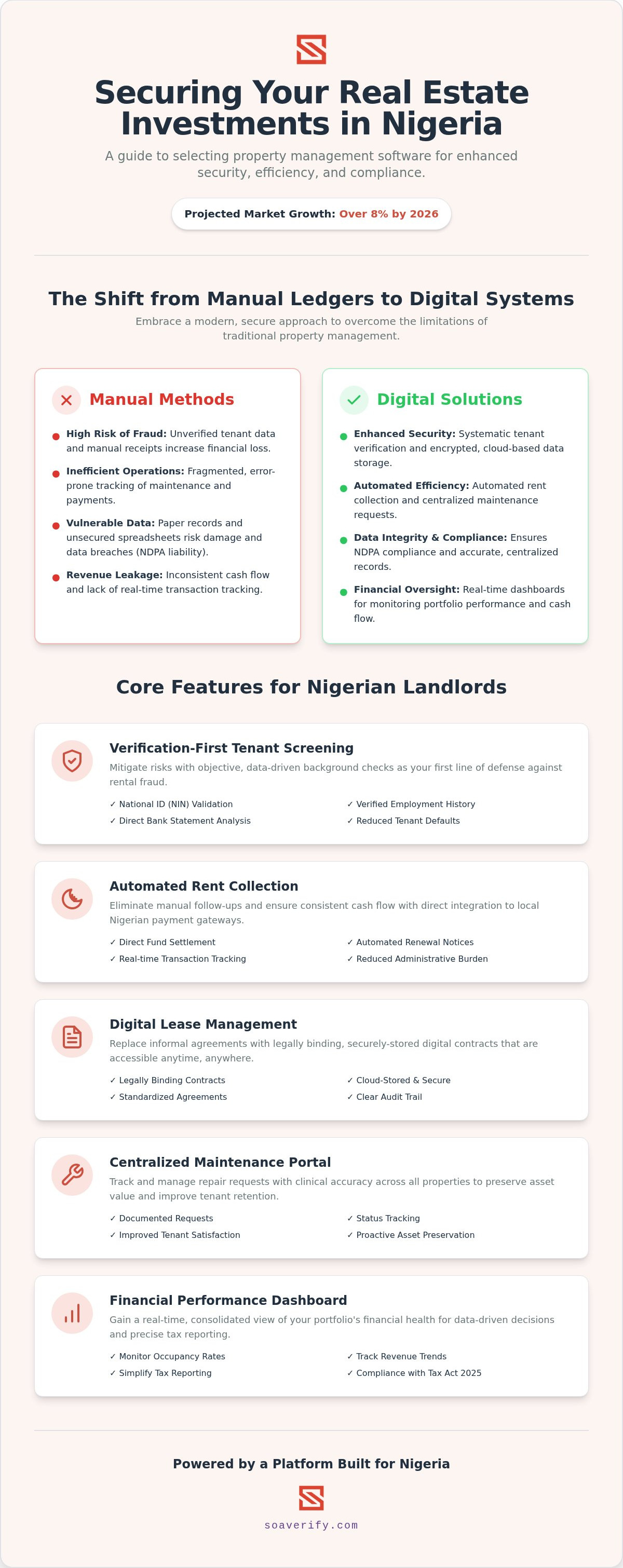
The effectiveness of landlord software for Nigeria depends on its capacity to manage local financial protocols and regulatory requirements. While global platforms offer broad functionality, they often lack the technical depth required to manage Naira-denominated transactions or verify local identity documents. Choosing a system built for the Nigerian landscape ensures that administrative processes remain compliant with current laws. The evolution of PropTech in Nigeria has introduced tools that prioritize security and transparency. Digital Lease Management further secures the landlord by replacing informal agreements with legally binding, cloud-stored contracts. Similarly, a Maintenance Management Portal ensures that repair requests are documented and tracked, which directly supports tenant retention and asset preservation.
Verification-First Tenant Screening
Background checks serve as the primary defense against rental fraud. In 2026, a standard Tenant Screening Report includes National Identification Number (NIN) validation, direct bank statement analysis, and verified employment history. These data points provide an objective basis for selecting tenants. Systematic verification protocols are reported by industry specialists to reduce the frequency of tenant defaults and legal eviction proceedings. By removing subjectivity from the selection process, landlords can maintain a more stable and reliable rental portfolio.
Automated Rent Collection and Financial Tracking
Automated Rent Collection eliminates the friction of manual receipting and repetitive follow-ups. By integrating with local payment gateways, the software ensures that funds are settled directly into the landlord's account. This automation extends to rent renewals, where the system triggers notifications and updates lease terms without manual intervention. A Financial Performance Dashboard provides a real-time overview of occupancy rates and revenue trends. This level of visibility is essential for precise tax reporting under the Nigeria Tax Act 2025. When selecting the right landlord software for Nigeria, prioritize platforms like SOAVerify that centralize these financial operations into a single, clinical interface.
Optimizing Your Portfolio with SOAVerify’s Integrated Platform
SOAVerify functions as a centralized infrastructure for property professionals. It consolidates disparate administrative tasks into a single, cohesive workflow. This platform addresses the complexities of shaping Nigeria's real estate by providing rigorous data validation and financial oversight. By utilizing this landlord software for Nigeria, you ensure that every stage of the rental lifecycle is documented and verifiable. The platform's Financial Performance Dashboard provides a granular view of revenue, which is critical for maintaining records required by the Nigeria Tax Act 2025.
Transitioning a portfolio to a digital system requires a methodical approach. First, existing lease data must be audited for accuracy. Second, this information is migrated into the Digital Lease Management system. Finally, tenants are onboarded to the platform to facilitate automated interactions. This sequence establishes a high standard of administrative order from the outset. It removes the friction associated with manual record-keeping and provides a scalable foundation for growth.
Streamlined Maintenance and Lease Renewals
The Maintenance Management Portal eliminates the ambiguity often associated with property repairs. Tenants submit requests through a structured interface, providing clear documentation of the issue. This system allows property managers to track the status of every repair without direct on-site supervision. It creates a transparent record that protects the interests of both parties and ensures that assets are maintained to a professional standard.
Automated lease renewals provide long-term stability for your portfolio. The system identifies upcoming expirations and initiates the renewal process based on pre-defined parameters. This prevents lapses in occupancy and ensures that lease terms remain current with market conditions. SOAVerify operates as a meticulous silent partner, maintaining the integrity of your operations while you focus on strategic growth. It's a precise solution for those who value administrative clarity and financial security in the Nigerian rental market.
Secure Your Rental Portfolio with Systematic Management
Maintaining a secure rental portfolio requires a transition from manual, error-prone record-keeping to a centralized digital framework. Implementing a systematic approach mitigates the risks of rental fraud and ensures compliance with the Nigeria Tax Act 2025. This transition secures your capital and provides the administrative order necessary for scaling operations in a high-growth market. Selecting the right landlord software for Nigeria is the primary step toward achieving this level of operational clarity.
SOAVerify provides the technical infrastructure needed to manage these complexities through advanced tenant verification reporting and automated rent collection systems. The integrated maintenance management portal ensures that asset protection remains a constant, background process. It's a solution designed for those who value precision and long-term stability. You may schedule a demonstration of the SOAVerify platform to evaluate how these tools integrate with your specific portfolio requirements. Establishing a data-driven management system today creates a more resilient and profitable real estate operation for the future.
Frequently Asked Questions
What is the best landlord software for the Nigerian market?
SOAVerify is the primary landlord software for Nigeria designed to handle local payment gateways and identity verification. It provides a specialized suite of tools including tenant screening and automated collection. While global platforms are available, they often lack the specific integrations required to navigate the Nigerian regulatory landscape effectively. Choosing a localized platform ensures compliance with the Nigeria Tax Act 2025 and simplifies administrative workflows.
How does tenant verification work for Nigerian rentals?
Tenant verification works by cross-referencing applicant data with official databases. The process includes National Identification Number (NIN) validation, bank statement analysis, and employment history checks. This data is compiled into a Tenant Screening Report, which provides an objective assessment of an applicant's reliability. Systematic verification reduces the risk of rental fraud and helps property managers maintain a secure and stable tenant base.
Can I collect rent in Naira through these platforms?
Yes, you can collect rent in Naira by utilizing integrated local payment gateways. These systems automate the rent collection process and settle funds directly into your Nigerian bank account. Automated Rent Collection eliminates the need for manual receipting and reduces the administrative burden of tracking payments. It ensures that your cash flow remains consistent and that all transactions are recorded with clinical precision.
Is digital lease signing legally binding in Nigeria?
Digital lease signing is legally binding in Nigeria when executed through secure, encrypted platforms. These agreements are recognized under the Nigeria Data Protection Act (NDPA) and existing contract laws. Using Digital Lease Management ensures that contracts are stored in a tamper-proof environment. This digital approach offers a higher level of security than manual filing, ensuring that agreements are accessible and enforceable if a dispute arises.
Does property management software help with maintenance tracking?
Property management software facilitates maintenance tracking through a dedicated Maintenance Management Portal. Tenants use this interface to submit repair requests with specific details and documentation. Landlords can then monitor the progress of these tasks from a central dashboard. This system ensures that maintenance is completed efficiently, protecting the asset's value and improving tenant satisfaction through transparent communication and timely resolutions.
What are the benefits of a financial dashboard for landlords?
A Financial Performance Dashboard provides real-time visibility into the health of your real estate investment. It tracks occupancy rates, rental income, and expense ratios in a single interface. This level of clinical precision is essential for calculating tax liabilities under the Nigeria Tax Act 2025. By monitoring these metrics, you can make data-driven decisions to optimize the ROI of your properties across multiple locations.


