

A single fraudulent identity document often costs a landlord more in legal fees and lost rent than an entire year of successful tenancies. Performing a comprehensive tenant background check is no longer optional for those who value rental security and financial order. You likely recognize that the modern rental market requires more than a basic credit pull to ensure long-term stability and protect your assets.
This guide outlines a rigorous, sequential protocol to mitigate these specific risks. By following a systematic verification workflow, you can identify discrepancies in history and identity before they impact your bottom line. We'll examine the technical steps for multi-region validation, identity verification through NIN and BVN systems, and the essential requirements for data protection compliance in 2026. This approach allows you to lower vacancy rates through precise placement while maintaining a secure, professional administrative standard. You'll gain a repeatable framework that transforms a complex screening process into a reliable, clinical operation.
Key Takeaways
- Replace subjective evaluation with a data-driven validation model to increase the reliability of every placement.
- Adopt a standardized tenant background check protocol to ensure procedural fairness and comprehensive risk assessment.
- Determine non-negotiable weighted criteria to align applicant selection with specific property security requirements.
- Identify critical financial and behavioral red flags that indicate potential future rental defaults or legal complications.
- Streamline the collection of essential documentation to verify identity and income through precise, industry-standard methods.
The Fundamentals of Tenant Background Verification
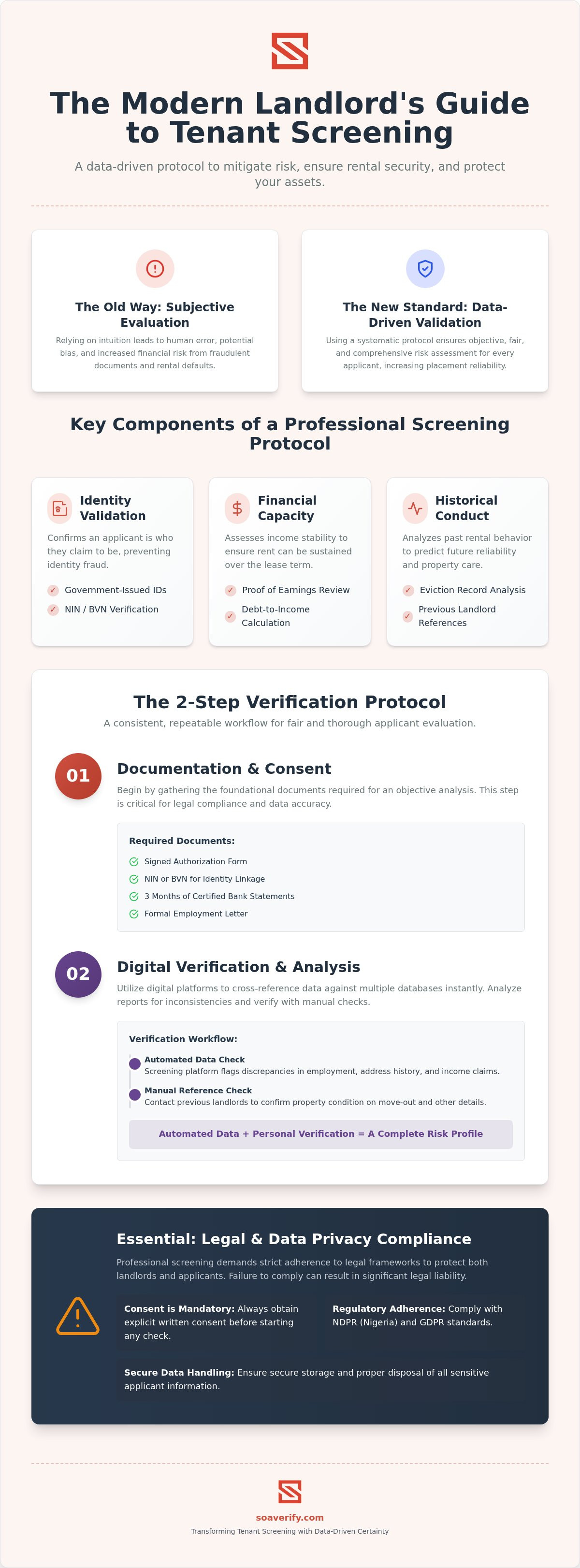
A tenant background check is a systematic protocol used to validate an applicant's identity, financial capacity, and rental history. This process marks a critical shift in modern property management. Landlords are increasingly moving away from subjective intuition and toward objective, data-driven validation. This transition reduces the margin for human error and establishes a clear, defensible standard for applicant selection.
Verification serves as the primary defense against future rental defaults and property damage. While a basic identity check confirms that a person exists, a comprehensive behavioral screening analyzes established patterns of conduct. This distinction is vital; knowing an applicant's name is less valuable than understanding their historical financial responsibility. Implementing a rigorous tenant background check ensures that only qualified individuals enter the ecosystem of your property.
Key Components of a Professional Screening Protocol
- Identity Validation: This step ensures the applicant is who they claim to be. It involves verifying government-issued IDs, such as a National Identification Number (NIN) or Bank Verification Number (BVN) for Nigerian tenancies.
- Financial Capacity: This component assesses income stability. It requires reviewing proof of earnings and calculating debt-to-income ratios to ensure the tenant can sustain rent payments over the lease term.
- Historical Conduct: This involves analyzing past rental behavior. Reviewing eviction records and contacting previous landlords provides insight into how an individual manages property and adheres to contract terms.
Legal Compliance and Data Privacy Standards
Professionalism in screening requires strict adherence to legal frameworks. Landlords must obtain explicit written consent before initiating any verification process. This consent is the foundation of a lawful search. In Nigeria, practitioners must comply with the Nigeria Data Protection Regulation (NDPR) to ensure data is handled ethically. Global operations often require adherence to GDPR standards. Proper data management also involves the secure storage and eventual disposal of sensitive applicant information to mitigate legal liability.
How to Conduct a Tenant Background Check: A Step-by-Step Protocol
Executing a tenant background check requires a structured approach to ensure every applicant is evaluated against the same benchmarks. This consistency prevents bias and establishes a legal safeguard for the property owner. You must gather specific data points that provide a holistic view of the applicant's reliability. A repeatable workflow reduces administrative friction and ensures that no critical verification step is overlooked during the intake process.
Step 1: Documentation and Consent Collection
The process begins with obtaining a signed authorization form. This document must explicitly permit the landlord to perform background and financial checks. In the Nigerian market, you should request a National Identification Number (NIN) or Bank Verification Number (BVN) to facilitate secure identity linkage. Standard income verification in 2026 requires the submission of three months of certified bank statements or a formal employment letter detailing compensation and tenure. These documents provide the raw data necessary for objective analysis.
Step 2: Digital Verification and Data Analysis
Digital tools have replaced manual document review as the standard for accuracy. Inputting applicant data into a tenant screening platform allows you to cross-reference multiple databases instantly. You should then analyze the resulting tenant screening report for any inconsistencies in employment history or previous residential addresses. Verify that the income claimed on the application aligns exactly with the deposits shown in bank statements. Discrepancies here often signal financial instability or intentional misrepresentation.
While digital systems provide the data, manual reference checks validate the human element. Contacting previous landlords directly allows you to confirm details that reports might miss, such as the condition of the property upon move-out. Using Digital Lease Management tools can help organize these findings into a centralized dashboard for final decision-making. This combination of automated data and personal verification creates a complete profile of risk.
Interpreting Results and Mitigating Rental Risk
Interpreting the data from a tenant background check requires a methodical evaluation of risk factors. You shouldn't view a report as a simple pass or fail indicator. Instead, apply weighted criteria to decide which results are non-negotiable for your specific property. For instance, an undisclosed eviction is typically a terminal red flag. Conversely, a high debt-to-income ratio might be mitigated by a guarantor or a higher security deposit if your local regulations allow it.
Professionalism remains essential when you communicate your final decision. If you deny an application based on the findings, you must provide a formal adverse action notice to maintain transparency and legal compliance. This step protects you from claims of bias and ensures the applicant understands the specific basis for the rejection. Clear communication at this stage establishes the tone for your professional administrative standards.
Common Red Flags in Verification Reports
Identifying inconsistencies early prevents future financial loss. You should watch for these specific indicators during your review of Tenant Screening Reports:
- Employment Discrepancies: Inconsistent dates or gaps that suggest financial instability or falsified records.
- Behavioral Patterns: Negative feedback from previous property managers regarding unauthorized occupants or neglect of property care.
- Verification Failures: Direct conflicts between digital verification results and the physical documents provided by the applicant.
Transitioning from Screening to Seamless Management
Successful verification is the first gate in a professional management workflow. Once you've validated a tenant's profile, the data should integrate directly into your Digital Lease Management system. This ensures that the terms of the agreement reflect the verified information and sets clear expectations for the relationship. It's much easier to manage a property when the foundation is built on accurate data.
Verification records also serve as a baseline for the tenant’s profile within your property management software. This integration allows for a smooth transition into Automated Rent Collection, as the initial screening has already confirmed the tenant's financial capacity. By treating the background check as the foundation of your operations, you reduce friction throughout the entire duration of the tenancy.
Standardizing Your Rental Security Protocol
Establishing a standardized verification process is the most effective method for mitigating long-term rental risk. By moving from subjective evaluations to objective data analysis, you ensure that every placement is based on verifiable financial and behavioral history. A rigorous tenant background check provides the clarity needed to protect your assets and maintain a stable cash flow. This systematic approach reduces the likelihood of defaults and ensures compliance with current data protection regulations.
Implementing these protocols shouldn't be an administrative burden. Modern platforms offer clinical precision in identity and income validation, allowing you to focus on property performance rather than manual document review. Our system is integrated with Nigeria’s leading property management suite, providing an automated workflow that moves seamlessly from screening to rent collection. This integration ensures that your tenant data remains accurate and accessible throughout the entire lease lifecycle.
Secure your rental property with SOAVerify’s advanced verification tools. Adopting a disciplined verification framework today ensures a more predictable and secure rental environment for the future.
Frequently Asked Questions
Is a tenant background check legal in Nigeria?
Yes, performing a tenant background check is legal in Nigeria when conducted within the framework of the Nigeria Data Protection Regulation (NDPR). Landlords must establish a lawful basis for processing personal data, which is usually achieved through explicit consent. You must ensure that sensitive information, such as National Identification Numbers, is handled with high levels of security to prevent data breaches and maintain strict regulatory compliance throughout the process.
How long does a typical tenant background check take to complete?
A digital verification process typically concludes within minutes, though manual components can extend the timeline to three business days. Automated systems provide immediate results for identity and financial capacity. If your protocol includes manual reference checks with previous property managers, the duration depends on their responsiveness. A structured workflow ensures that these administrative delays don't unnecessarily increase your vacancy rates during the transition.
What is the difference between a credit check and a full background check?
A credit check analyzes an individual's financial liability and repayment history, whereas a full background check evaluates their entire profile as a tenant. The credit report is merely one data point within a larger verification framework. A complete tenant background check incorporates identity validation, eviction history, and behavioral references to provide a more accurate assessment of potential rental risk and future property care.
Can I perform a background check without the tenant’s permission?
You cannot legally perform a background search without the applicant's explicit written authorization. Data protection standards require that the tenant is informed about what data is being collected and how it'll be used. Obtaining a signed consent form is a mandatory step in any professional screening protocol. Failure to secure this permission can lead to severe legal penalties and significant financial damages under local privacy laws.


